
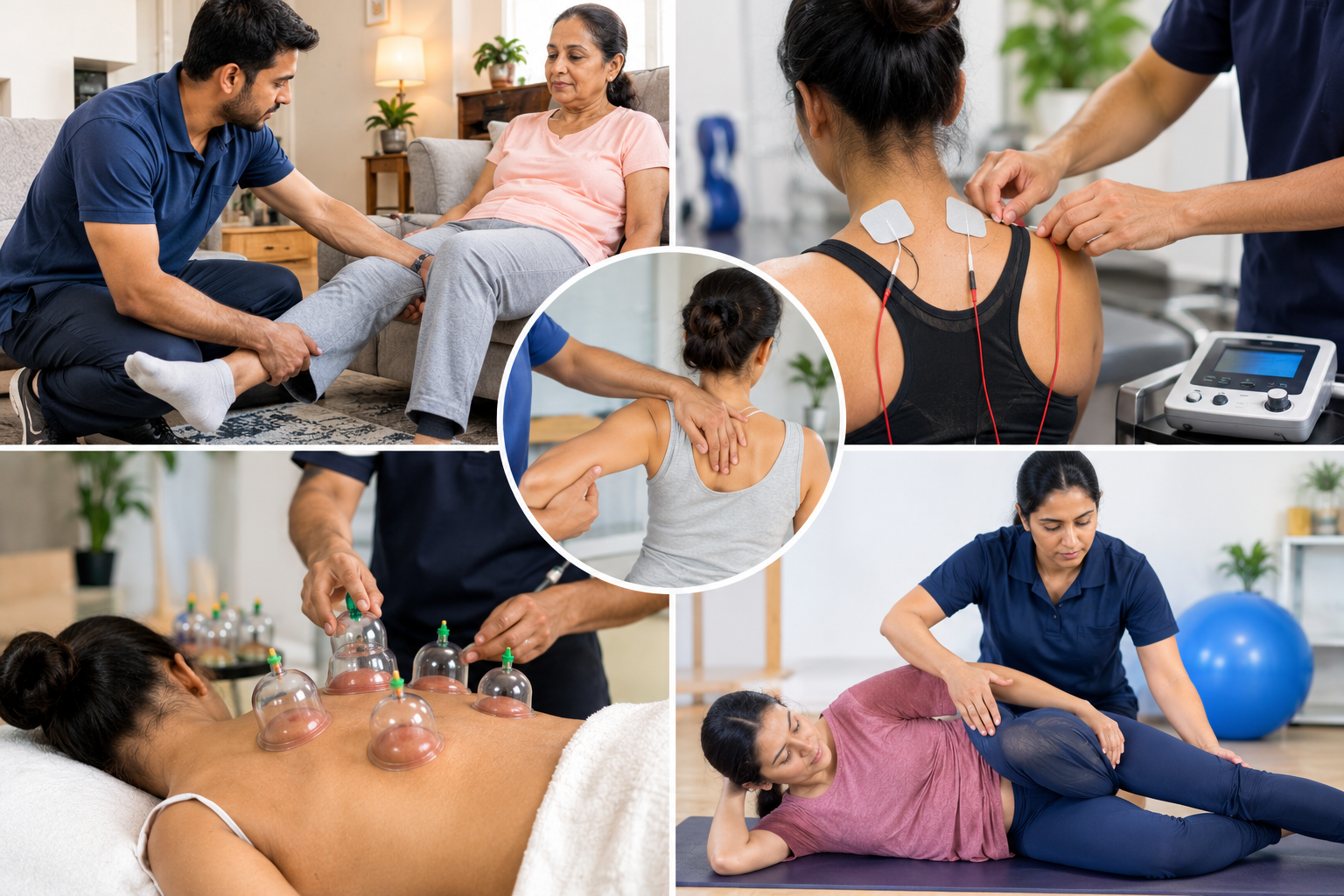
Physiotherapy looks very different depending on who’s receiving it and why. Female Physiotherapy Treatment In India addresses the specific physical demands women face across hormonal and life-stage changes. Pediatric Therapy In India supports children who need help reaching developmental milestones. Parkinson’s Disease Treatment In India uses targeted movement work to slow functional decline. Home Physiotherapy In India delivers licensed clinical care to patients who can’t or prefer not to travel to a facility.
Most people think of physiotherapy as a single thing — you get hurt, you go to a physio, you do some exercises, you recover. But that picture misses how differently this field actually works across patient populations. A postpartum woman dealing with pelvic floor weakness and a seven-year-old with coordination delays don’t just have different symptoms; they need entirely different clinical thinking, different session structures, and different goals.
Across India, practitioners have been moving steadily toward population-specific care — and patients who understand these distinctions tend to find the right provider faster and get better results. Here’s a clear breakdown of four key physiotherapy pathways available in India today.
Female Physiotherapy Treatment In India
Women’s bodies go through real structural and hormonal changes — pregnancy, delivery, postpartum recovery, perimenopause — and each stage carries specific injury risks that general musculoskeletal protocols weren’t designed to address.
Female Physiotherapy Treatment In India is built around these demands. In practice, the most common presentations include pelvic floor dysfunction after delivery, which ranges from stress urinary incontinence to pelvic organ prolapse. A well-structured 8–12 week pelvic floor rehabilitation program addresses most of these cases effectively when started early enough.
Lumbar and sacroiliac pain during pregnancy is another frequent issue. Weight redistribution and postural changes place significant load on the lower back — targeted manual therapy and core stabilization work can reduce pain without medication. Breastfeeding-related postural strain affecting the thoracic spine and shoulder girdle often goes unaddressed until it becomes chronic, which is a missed opportunity for simple early intervention.
Menopausal joint stiffness responds well to graded resistance training, but it needs proper supervision from a physio rather than a generic gym program that wasn’t designed with hormonal context in mind.
If you’re seeing female patients brush off pelvic or postural symptoms as an inevitable part of life, it’s worth noting that early physiotherapy intervention consistently produces better outcomes than waiting for symptoms to worsen.
Pediatric Therapy In India
Children don’t follow identical developmental curves, and that’s not always a problem. When delays are clinically significant — a child not crawling by nine months, not walking independently by 15 months, or struggling with age-appropriate motor tasks — early physiotherapy input can make a real, measurable difference.
Pediatric Therapy In India works with children across a wide range of presentations: cerebral palsy and other neurodevelopmental conditions, post-surgical recovery after orthopedic procedures, developmental coordination disorder (which affects roughly 5–6% of school-age children worldwide and frequently goes undiagnosed), and hypotonia that limits stamina and postural control in daily life.
Sessions are structured around play — obstacle courses, balance boards, therapist-designed games — because children disengage quickly from repetitive adult-style exercise. Parents are actively involved throughout, learning home programs they can run between clinic visits. Research shows that parent-delivered home exercises, when properly coached, can roughly double the rate of skill acquisition compared to clinic sessions alone.
Referral decisions should be driven by functional impact. If a child’s motor difficulties are affecting school participation or social confidence, that’s a reasonable threshold for a pediatric physio assessment — regardless of whether they technically fall within age-based norms.
Parkinson’s Disease Treatment In India
Parkinson’s is progressive, and no physiotherapy protocol reverses it. What exercise-based rehabilitation does — when applied consistently and correctly — is slow the rate of functional decline and reduce two of its most dangerous consequences: falls and immobility.
Parkinson’s Disease Treatment In India typically integrates several evidence-based approaches. LSVT BIG therapy is one of the most well-validated — it’s an intensive, standardized program that targets movement amplitude, training patients to make deliberately large movements to counteract the motor under-scaling the disease causes. Gait retraining using auditory or visual cues has been shown in peer-reviewed trials to reduce freezing episodes and improve stride length. Balance training on unstable surfaces builds reactive postural control, which directly reduces fall frequency in moderate-stage patients.
Treatment plans need to evolve as symptoms progress. A protocol that works well at Hoehn and Yahr Stage 2 may be insufficient at Stage 3. Formal reassessments every three to four months — rather than open-ended maintenance programs — keep care appropriately calibrated to where the patient actually is.
Home Physiotherapy In India
Clinic attendance is a genuine barrier for many patients. Elderly individuals with limited mobility, post-surgical patients in early recovery, and people in areas with poor transport infrastructure often skip sessions — which interrupts rehabilitation at exactly the point where consistency matters most.
Home Physiotherapy In India solves this by deploying licensed physiotherapists to the patient’s location, typically with portable assessment tools and the capacity to deliver most standard rehabilitation protocols on-site.
Home sessions work particularly well for post-hip or post-knee replacement patients in the first four to six weeks of recovery, when travel is painful and crowded waiting rooms carry infection risk. They’re also well-suited for elderly patients with moderate-to-severe balance impairment where the journey to a clinic is itself a fall risk, and for pediatric patients who perform better in familiar surroundings than in clinical settings.
One thing worth understanding: home physiotherapy demands a different kind of skill from the treating practitioner. A clinic has parallel bars, treatment plinths, and resistance machines. A home has chairs, walls, and stairs. Good home physiotherapists use that as an advantage — practicing functional movements in the actual environment where patients need to perform them, which is often more transferable than controlled clinic exercises.
Finding the Right Physiotherapy Care for Your Needs
Getting the right specialist in front of the right patient is where outcomes are genuinely won or lost. A generalist physiotherapist treating a Parkinson’s patient without specific neurology training may deliver well-intentioned sessions that fall short clinically. A pediatric physio applying adult rehabilitation logic with a child with hypotonia will likely see poor engagement and slow progress.
When evaluating providers in India, ask directly about their case volume in your specific area. A physio who has managed 200 postpartum pelvic floor cases brings practical pattern recognition that a general practitioner simply won’t have built yet. That experience matters more than credentials on a wall.
For patients whose recovery also involves spinal pain, joint restriction, or nerve-related symptoms, it’s worth having a conversation about whether Chiropractor in India services might complement the physiotherapy program. Chiropractic care addresses spinal alignment and joint mobility through manual adjustment techniques. When it’s coordinated with physiotherapy — rather than running in parallel without communication between providers — it can accelerate certain recovery timelines, particularly for patients with mechanical back or neck involvement. Always raise this with your treating providers before booking both independently.