
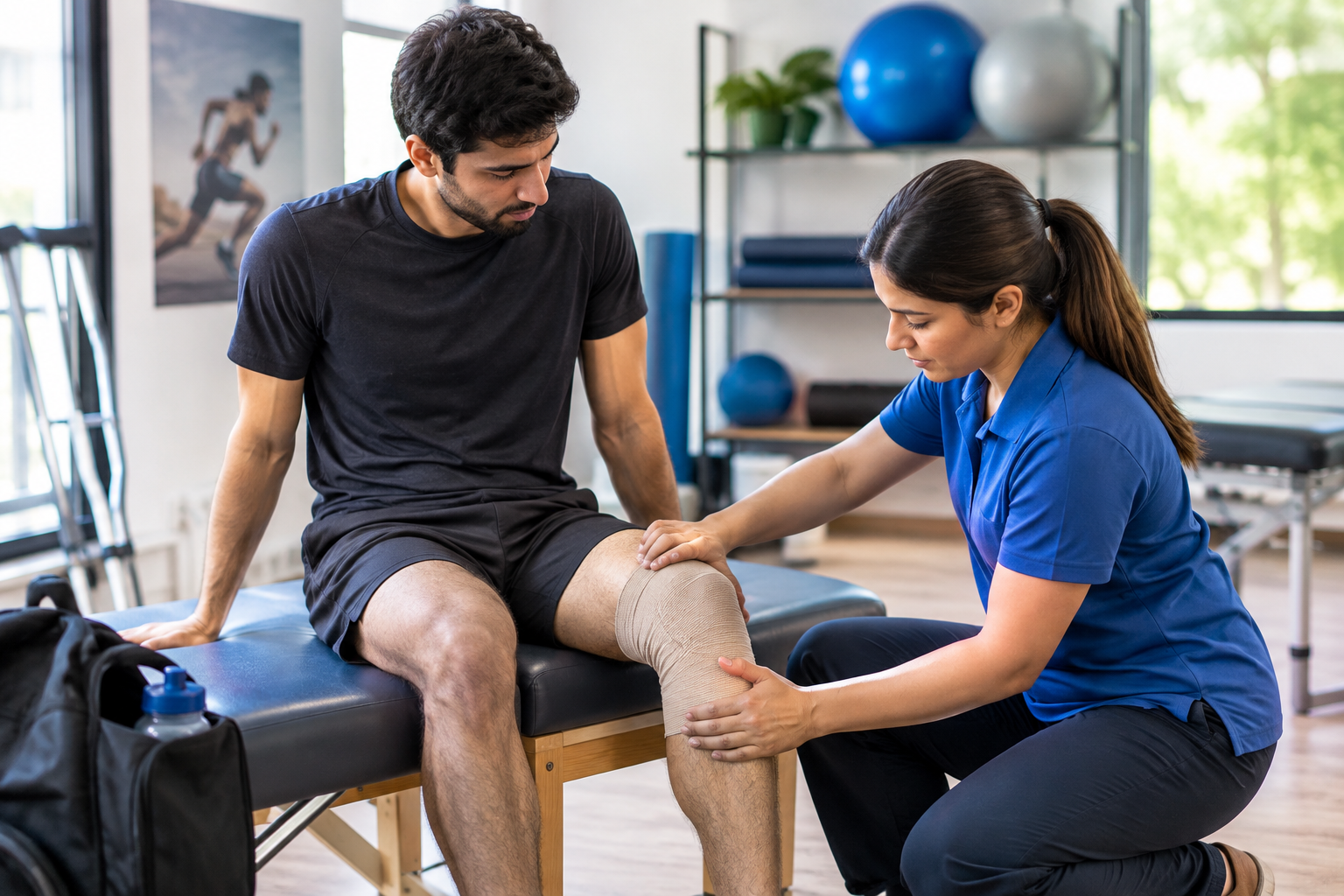
Getting hurt is never part of the plan. One moment you’re deep in your training, chasing a goal you’ve been working toward for months — and then something shifts. A sudden snap, a twist that lands wrong, or a slow-building ache that finally refuses to be ignored. You’re left asking yourself whether to push on or finally do something about it. The truth is, Sports Injury Treatment In India has genuinely never been more accessible, and getting real help doesn’t have to feel like a big, complicated leap.
What trips most people up is figuring out where the line is between normal, post-workout soreness and something that actually warrants attention. Tired muscles after a hard session? That’s just part of the process. But pain that sticks around for days, comes roaring back the moment you return to activity, or quietly starts changing how you move? That’s your body saying it needs more than a day off.
Sports Injury Treatment In India
Here’s a pattern that plays out more often than it should: someone gets hurt, figures it’ll sort itself out, waits a few weeks, and then ends up dealing with a problem that’s grown more complicated than it needed to be. The body is incredibly adaptive — but that adaptability works against you when it starts compensating for an untreated injury and creating new problems in the process.
Sports Injury Treatment In India brings together practitioners who actually look at you as an individual — your injury, your history, your goals, and what you want to get back to. The recovery plan is built around your life, not a generic checklist.
A few signs that it’s time to stop waiting:
- Pain that’s still there after a few days of genuine rest
- Swelling or bruising that won’t settle down
- A joint that feels wobbly, unreliable, or keeps giving way
- Movement that feels restricted in a way that just isn’t normal for you
Getting help early isn’t giving up on yourself. It’s choosing to come back fully instead of partially.
Ankle Strain Treatment In India
Everyone’s heard the advice: roll it, ice it, walk it off. And for truly minor sprains, that sometimes works. But ankle injuries have a frustrating way of coming back — and each time they do, that joint gets a little less stable, a little less trustworthy under pressure.
When a sprain doesn’t heal properly, the tissue might recover on the surface while the deeper stability is still compromised. That’s the setup for a cycle of re-injury that can follow you for years.
Ankle Strain Treatment In India works on restoring what the injury took away — not just the absence of pain, but genuine, functional stability. A solid rehabilitation approach usually moves through:
- Careful mobilization to reduce stiffness without pushing tissue that isn’t ready
- Strength and balance work to rebuild the ankle’s ability to hold steady under real pressure
- A gradual, structured return to activity rather than a sudden jump back in
If your ankle is still swelling after activity, still feels unreliable on uneven ground, or still hurts to fully bear weight — weeks after the initial injury — that’s not just “taking a while.” It needs proper attention.
Chondromalacia Patella Treatment In India
Most people don’t call it by its clinical name. They just know it as that persistent, dull ache around the kneecap that flares up on stairs, makes long drives uncomfortable, and quietly chips away at training sessions. Runner’s knee is frustrating precisely because it tends to come and go — just manageable enough to keep going, but never quite gone.
The underlying issue is usually a combination of muscle imbalances and movement habits that put uneven pressure on the kneecap over time. Treating only the symptom — icing it, resting until it calms down — doesn’t address any of that, which is why it keeps coming back.
Chondromalacia patella treatment In India looks at the full picture. A rehabilitation plan typically includes:
- Strengthening the quads, hips, and surrounding muscles to reduce the load on the knee joint
- Flexibility and soft tissue work to ease the tension that pulls the kneecap out of alignment
- Movement retraining to address the patterns that created the problem in the first place
If knee discomfort is affecting your training, or you’re noticing a grinding or clicking sensation that wasn’t there before, an early assessment is worth far more than another cycle of “wait and see.”
Postural Alignment Treatment In India
Posture rarely gets taken seriously until it starts causing real problems. It’s easy to think of it as a habit, something you fix in the moment and then forget about. But the way your body holds itself — through years of sport, hours at a desk, or quietly favoring one side after an old injury — shapes how you move, how you load your joints, and how much wear accumulates in the wrong places over time.
The insidious thing about postural imbalances is how slowly they build. By the time they show up as pain, the pattern has often been in place for a long time.
Postural Alignment Treatment In India goes beyond telling you to stand up straighter. A practitioner looks at how you actually move — walking, sitting, exercising — and identifies where the real imbalances are hiding. From there, a targeted plan works to correct those patterns and relieve the strain they’re causing.
Worth looking into if any of these feel familiar:
- Tension in the neck, shoulders, or back that shows up every day without a clear reason
- Injuries that keep happening on the same side, in the same area
- Shoes that wear down in an uneven pattern, hinting at how you walk or run
Addressing posture doesn’t just reduce pain — it builds a better foundation under everything else you do.
Your Comeback Starts Here
Being sidelined is one of the harder parts of being an athlete, whatever level you play at. It disrupts your rhythm, tests your patience, and makes every day feel a little off. But there’s something worth holding onto in those moments: an injury is also an opportunity to understand your body more deeply and come back from it more resilient than before.
Rest has its place. Time matters in recovery. But if the same injury keeps cycling back, if pain won’t fully resolve no matter what you try, or if something just doesn’t feel right — that’s the signal that you need real, structured support. For care that’s grounded in genuine expertise and a real commitment to helping you feel and move at your best, visit the Chiropractor in India website. Your comeback is worth fighting for — and the right team beside you makes all the difference.